Auditory Trauma and PTSD: How ETT® Opens a New Path When Other Approaches Fall Short

The Hidden Wound: Why Sound-Based Trauma Deserves Its Own Treatment
There is a particular kind of silence that follows a gunshot. A particular tone in a voice that says, “I’m sorry, but the test results came back...” A particular screech of tires and crunch of metal that, for the person who lived through it, never fully fades. We call this auditory trauma: a lasting psychological imprint of a sound that arrived in the same instant everything changed.
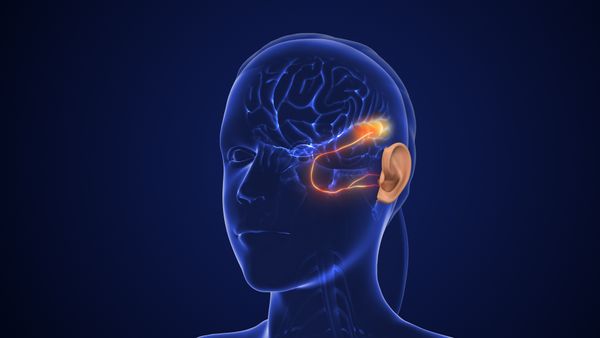
Among clinicians trained in Emotional Transformation Therapy (ETT®), auditory trauma is recognized as a frequently overlooked component of post-traumatic stress. We talk about flashbacks as images. We talk about the body “keeping score.” But we rarely talk about how a sound can become a trigger so deeply wired into the nervous system that hearing anything even remotely similar can consistently pull a person right back into the worst moment of their life.
The Moment That Changes Everything
Think about the sounds that mark the line between “before” and “after” for so many people:
The crack of gunfire echoing down a school hallway.
The whine of incoming artillery, or the silence that follows an explosion in a combat zone.
The grinding, metallic impact of a car crash, and the sudden quiet afterward.
A doctor’s voice delivering a diagnosis that rearranges a person’s entire future.
These aren’t just memories. For many survivors, they are ongoing events. A car door slamming, a fire alarm, a phone ringing late at night, fireworks on the Fourth of July — any of these can reopen the moment as if no time has passed at all. The sound becomes a kind of time machine, and the person has no control over when it activates.
What makes auditory trauma so insidious is that sound is everywhere, and largely outside our control. A person can avoid a place. It’s much harder to avoid a sound.

Why Talk Therapy Alone Often Isn’t Enough
Traditional talk therapy gives people language for what happened to them, and that matters enormously. But trauma--especially the kind encoded through sound--often lives below the level of language, in the brainstem and limbic system, in pathways that formed in a fraction of a second and don’t respond well to being “talked through” alone. Oftentimes, the specific impact is not clearly understood by the individual, and can be buried within someone’s subconscious, therefore making talk therapy alone ineffective.
This is where ETT® therapists have found Emotional Transformation Therapy to be a significantly promising tool.
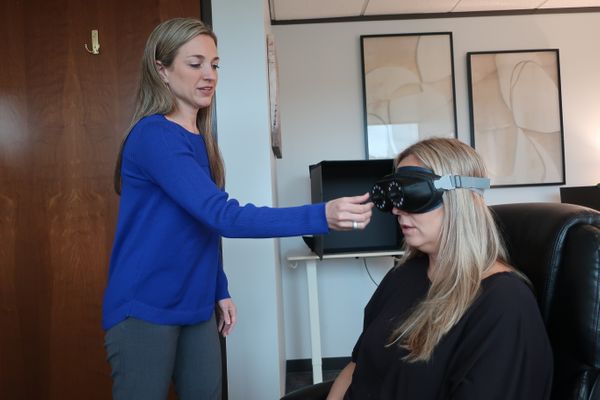
ETT Peripheral Eye Stimulation
How ETT® Approaches Sound-Based Trauma
ETT® works by pairing the recall of a traumatic memory, including its sensory components, like sound, with carefully calibrated visual and sensory stimulation. The idea is to engage the brain’s visual and emotional processing systems simultaneously, creating an opening for the nervous system to reprocess the memory in a way that talk alone often can’t reach.
In practice, when ETT® therapists work with someone carrying the weight of an auditory trauma, the sound isn’t avoided. It’s approached, gently and with structure, while the brain is in a different state than it was in the moment of the original event. Over the course of this work, many clients describe something remarkable: the sound that once hijacked their entire body starts to lose its grip. It becomes something they remember, rather than something they relive.
For example, a veteran might still recognize the sound of a helicopter overhead, but it no longer sends his heart rate through the roof. A survivor of a car accident might still flinch slightly at a screech of brakes, but it no longer locks her in place for the rest of the day. A patient who heard the words “I’m so sorry” from a doctor might still feel the weight of that memory, but it no longer ambushes them in the grocery store when a stranger says the same words by coincidence.
You Are Not Overreacting
If a sound has ever stopped you in your tracks — heart pounding, breath caught, suddenly back in a moment you thought you’d left behind — ETT® therapists want you to hear this clearly: that is not weakness, and it is not “just in your head.” It’s your nervous system doing exactly what it was built to do after an overwhelming event. And your nervous system can adapt and change.
Auditory trauma deserves the same attention, compassion, and targeted treatment given to any other form of trauma. The sounds that once marked the moment everything changed don’t have to keep retriggering you or negatively affecting your life.
To learn more about ETT®, consider reaching out to a clinician trained Emotional Transformation Therapy. Healing doesn’t mean forgetting. It means finally being able to integrate with your world again without being pulled back into the worst of it.
If you or someone you know is struggling with the lasting effects of trauma, please don’t wait to seek support. Reach out to a licensed mental health professional to talk about options for care. For a list of ETT-certified providers, view our Directory.