How Emotional Transformation Therapy® Addresses Addiction at Its Source

Addiction is one of the most complex and persistent challenges in clinical mental health practice. For many clients, conventional treatment approaches provide meaningful support. And yet a significant number of clients cycle through 12-step programs, cognitive-behavioral therapy, and medication-assisted treatment without finding lasting relief. They are not failing their treatment. Their treatment may not be reaching the part of them that drives the addiction.

Emotional Transformation Therapy (ETT®) offers a distinctive approach to this problem. Rather than focusing primarily on behavior or cognition, ETT® works directly with the emotional and neural processes that underlie addictive behavior. It does this through a non-pharmacological approach: the changes clients experience are generated through the activation of their own natural processes. Dr. Steven Vazquez, LPC-S, LMFT, the founder and developer of ETT®, reports being unaware of any other addiction treatment approach that addresses the brain's addictive neural mechanisms in this way without medication.

A Different Standard for Success

According to the National Institute on Drug Abuse, between 40 and 60 percent of people treated for addiction will relapse. More striking still, over 85 percent revert to previous patterns of use within the first year of treatment. For heroin and nicotine specifically, that figure climbs to between 80 and 95 percent. The field's standard response is to frame these numbers as evidence that addiction is a chronic condition — comparable, as NIDA puts it, to hypertension or asthma. That comparison is meant to reduce stigma, and in that respect it serves a purpose. But it also normalizes a failure rate that, in any other area of medicine, would be driving urgent demand for better approaches. For the clients behind those statistics, and for the families affected, "chronic and managed" is not the outcome they came looking for.

The current standard of care for opioid addiction frequently involves medication-assisted treatment (MAT) using methadone or buprenorphine (Suboxone). These medications have a meaningful role in stabilizing clients, reducing harm, and supporting engagement in treatment. The clinical reality, however, is that methadone maintenance requires at least 12 months and in many cases extends indefinitely, with no established endpoint (Rockefeller Institute of Government, 2019; Psychiatric Services, 2014). For a significant number of clients, the treatment goal shifts from resolution to long-term pharmaceutical management. The root emotional and psychological drivers of the addiction often remain unaddressed.

Research published in the American Journal of Public Health offers a compelling counterpoint to the "addiction is forever" framework. In a landmark study, psychiatrist Lee Robins followed nearly 900 Vietnam veterans who had been addicted to heroin while deployed. Upon returning home — removed from the environment, relationships, and emotional conditions that had driven their use — approximately 90 percent ceased their addiction without formal treatment. Only 5 percent became re-addicted within a year (Robins, Davis, and Nurco, American Journal of Public Health, 1974). The finding challenged the prevailing view that heroin addiction was permanent and irreversible, and suggested something the field has been slow to fully absorb: that when the underlying conditions driving addictive behavior change, the addiction itself can dissolve.

ETT® is designed for clients who want a drug-free approach — one that works directly with the emotional and psychological conditions that sustain addictive behavior, rather than managing symptoms through ongoing pharmaceutical support. It is not a criticism of medication-assisted treatment, which serves an important function for many clients. It is an alternative pathway for those who are looking for something different.

ETT® starts from a different premise: that if the underlying emotional drivers of addictive behavior can be reached and resolved, the compulsion to use loses its source. That is not a claim that every client will respond the same way. It is a clinical hypothesis, supported by a growing body of practitioner observation, that is worth taking seriously.
ett-therapy-for-addiction.jpg

Why Conventional Approaches Sometimes Fall Short

Most talk-based therapies operate through conscious, verbal processing. A client describes their experience, reflects on their patterns, and develops insight and new strategies. This is valuable work. But addiction, like trauma, frequently operates outside the reach of conscious verbal processing.

The neural pathways that drive craving, compulsive behavior, and relapse are largely implicit. They are not accessible through conversation alone. A client can understand intellectually why they use, develop coping strategies, and still find themselves overwhelmed by craving that bypasses all of it. This is not a failure of will. It is a reflection of where in the brain the addictive pattern lives.

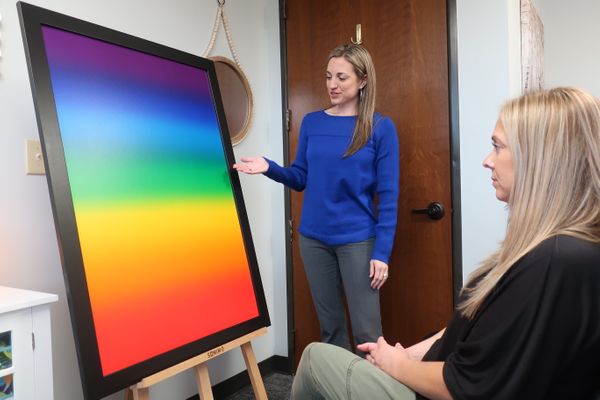
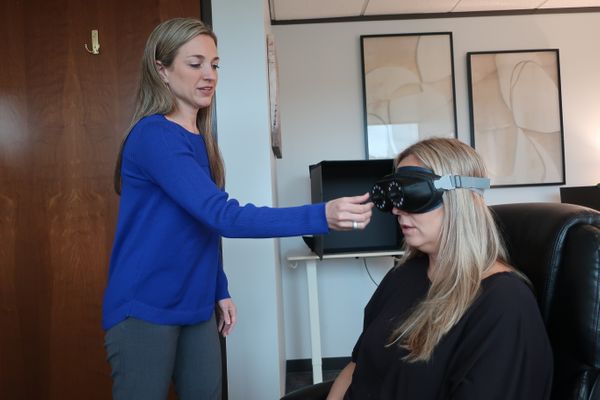
ETT® uses visual brain stimulation to target and engage the neural mechanisms involved in the brain's addictive neural sequence, reaching the implicit emotional memory and underlying relational patterns that drive addictive behavior directly.

The Addictive Template Model

At the heart of ETT®'s approach to addiction is what Dr. Vazquez calls the Addictive Template Model of Treatment. This framework holds that addictive behavior is not simply a habit or a chemical dependency. It is an emotional pattern, shaped by attachment experiences, relational trauma, and the development of addictive neural pathways as a means of managing intolerable emotional states.

When a client uses a substance or engages in a behavioral addiction, they are often attempting to regulate an emotional experience they have no other means of managing. The addiction is a solution to an emotional problem, even as it creates profound new ones.

Clients report that relevant implicit memory — the emotional material that fuels the addictive pattern — is accessed and resolved over the course of treatment. Rather than working around the addictive pattern, ETT®-certified therapists work with the emotional material that gives rise to it. The model has been applied to both drug and behavioral addictions, including alcohol, drugs, and gambling.

ETT-Spectral-Chart-Treatment.JPG

ETT Spectral Chart

What ETT® Therapists and Clients Report

ETT®-certified therapists who work with addiction clients consistently report meaningful clinical results. Several observations stand out:

  • ETT®-certified therapists report that clients consistently describe elimination of addictive craving within 15 to 20 minutes of treatment, through the activation of the client's own natural processes, without pharmacological agents.

  • ETT®-certified therapists report that clients consistently describe elimination of withdrawal symptoms within one to two sessions.

  • Based on clinical observation, clients who complete the full 15-session outpatient ETT® program have not reported relapse to date.

  • Clients report that relevant implicit memory is accessed consistently and resolved over the course of treatment.

These are practitioner and client reports, not findings from controlled clinical research. They are offered as clinical observations that reflect the experience of ETT®-certified therapists in practice, and as a basis for the independent research that the ETT® community is actively pursuing.

Multi-dimensional-Eye-Movement.JPG

ETT Multi-dimensional Eye Movement

How ETT® Is Used in Addiction Treatment

In clinical practice, ETT® may support the following goals:

  • Some clients report elimination of craving intensity over the course of treatment.

  • ETT® includes specific procedures designed to facilitate improved motivation to pursue recovery.

  • The approach may be used to address emotional factors associated with co-occurring clinical concerns, including anxiety, depression, and trauma. Many clients report meaningful improvement in these areas over the course of treatment.

  • ETT® includes procedures that may help address emotional distress and stress-related factors associated with physical pain.

  • It includes processes intended to support healthier relationship patterns, which are a critical dimension of sustainable recovery.

  • ETT® may help clients become aware of the underlying emotional and relational factors contributing to their addictive patterns, often for the first time.

  • ETT® can facilitate profound states of awareness and connection, including experiences that some clients describe as spiritual or transcendent, through the activation of the client's own natural processes.

Peripheral-Eye-Stimulation.JPG

ETT Peripheral Eye Stimulation

The Role of the Therapeutic Relationship

One of the most consistent findings across the ETT® case literature is the significance of the therapeutic relationship itself. Clients repeatedly identify feeling genuinely seen, heard, and cared for by their ETT®-certified therapist as a central element of their experience. This is not incidental to the method. It is foundational to it.

ETT® is an attachment-based approach. For clients whose addictive behavior developed in response to relational wounds and attachment deficits, the experience of a genuine therapeutic relationship may be among the most powerful elements of treatment.

Treatment Format

Some ETT® treatment plans for addiction-related concerns are structured around a 15-session outpatient format, which many clients find accessible in terms of both schedule and cost compared to inpatient or residential programs. Length of treatment varies by client need, level of care, and individual circumstances. ETT® is always delivered by a licensed, ETT®-certified mental health professional.

ETT® is an evidence-informed psychotherapeutic approach, currently supported by clinical case literature and practitioner experience. It is not a standalone medical treatment for addiction, and decisions about any aspect of a client's care, including medication-assisted treatment, should always be made in collaboration with the appropriate treating providers.

What ETT® offers is a distinctive and clinically compelling approach to the emotional dimensions of addiction, one that reaches where many conventional approaches cannot, without the use of medication, and through the activation of the client's own natural capacity for change.

If you are a licensed clinician interested in learning more about ETT® certification, or a client seeking an ETT®-certified therapist, visit etttraining.com.

A directory of certified ETT therapists is available at etttraining.com/ett-therapist-directory.

ETT Therapist Directory

ETT® is an evidence-informed therapeutic approach currently supported by clinical case literature and practitioner experience. It has not yet been independently validated through randomized controlled trials and is not currently listed on major evidence-based treatment registries. Individual experiences vary. These observations reflect clinical practice experience and client reports and are not a guarantee or prediction of outcomes for any other individual. Nothing in this article constitutes medical advice. Individuals experiencing addiction or other mental health concerns should consult a licensed healthcare provider. For a list of ETT-certified providers, view our Directory.